
You Are Not Your Brand (Even If It Feels That Way)
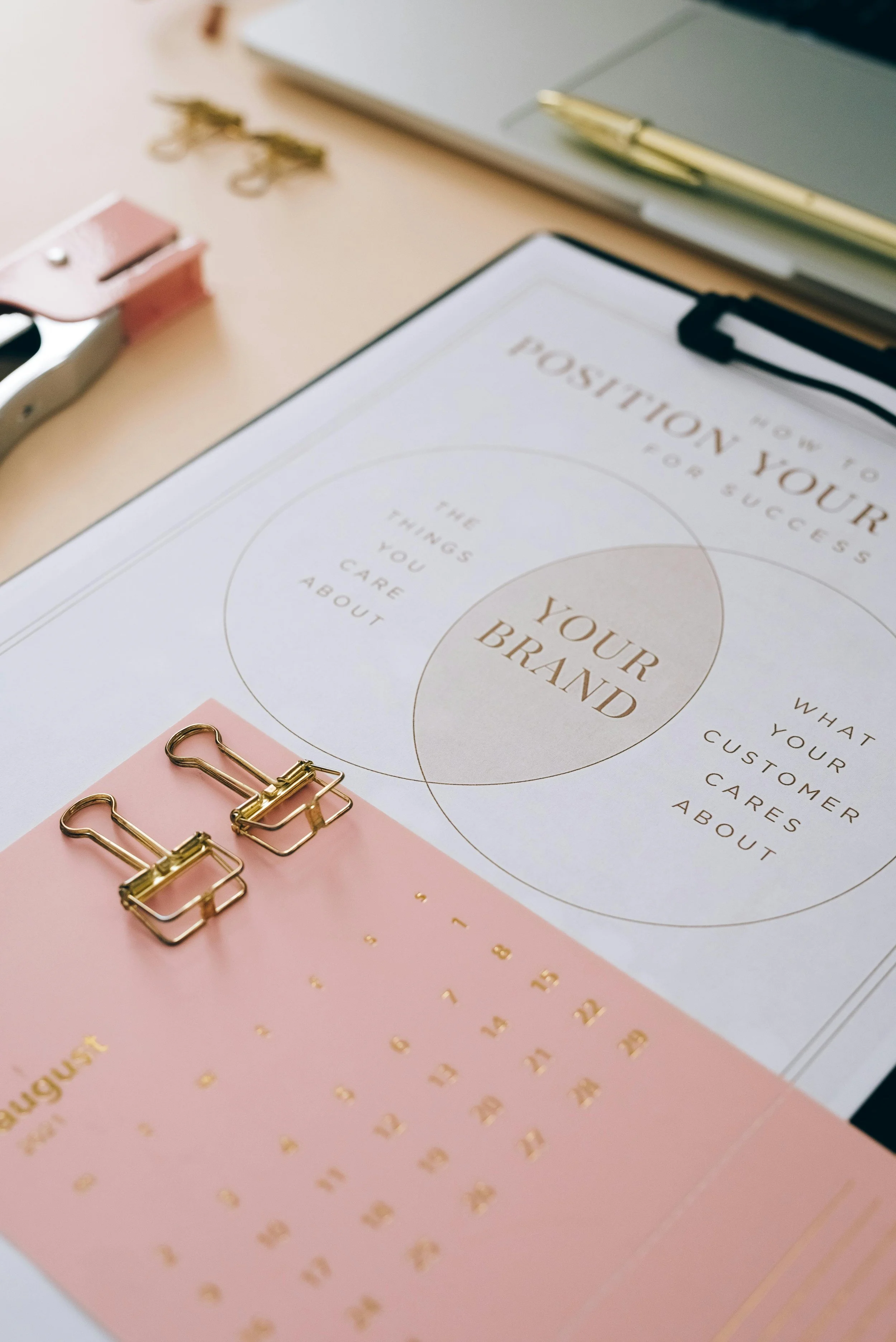
Why founders need a little space between their identity and their brand strategy
When you're building a company from scratch—especially something personal, creative, or cause-driven—your brand often starts as an extension of you.
Your values.
Your vibe.
Your vision at 2 a.m. that made you quit your job and buy a domain.
And honestly? That’s a great place to start.
Founders should be close to the brand. That intimacy can make early messaging feel real, voicey, and emotionally magnetic.
But here’s where it gets tricky:
When your personal identity becomes the entire brand—there’s no room for growth, clarity, or even basic strategy.
So let’s talk about what happens when the line between you and your brand gets blurry—and how to lovingly redraw it.
When You Are the Brand, It Can Get Messy
Here are a few red flags we’ve seen (and helped fix):
Every design decision becomes personal
A color isn’t just a color—it’s your favorite color, your birthstone, or the exact shade of your childhood bedroom. Helpful? Sometimes. Strategic? Not always.The brand can’t scale beyond you
If your business is built entirely on you—your face, your name, your personality—how do you grow, hire, delegate, or sell it?Feedback feels like a personal attack
When someone says, “The messaging isn’t landing,” it shouldn’t feel like, “You’re not good enough.”You’re stuck in founder fog
You’re so close to your own story, you can’t see what’s actually valuable or relevant to the audience. (It happens. That’s why brand strategists exist.)
A Healthier Mindset: The Brand Is Inspired by You—Not Defined by You
Think of your brand as a separate, intentional identity. One that shares your values, but can still stand on its own. One that honors your story—but isn’t a memoir.
Here’s how to start separating the two (without losing the soul):
Step 1: Define the Brand’s Role
Ask:
What does this brand exist to do in the world—and for whom?
That shifts the focus from you to them (your audience), which is where branding actually lives.
Step 2: Craft a Brand Persona
What kind of voice does your brand speak in?
What does it wear, say, believe, or joke about?
Hint: it might share your sensibilities, but it doesn’t have to be a perfect mirror of you.
Think:
You’re the director. The brand is the actor. You guide the story—but the brand takes the stage.
Step 3: Get Comfortable Editing Yourself
Some things you love might not belong in your brand. And that’s okay.
Your favorite color might not be the best for UX.
That inside joke from 2017 might confuse new audiences.
Your 14-step origin story might need to be a three-line bio.
Let go with love. It doesn’t erase your passion—it focuses it.
Step 4: Let Other People Own the Brand, Too
Your brand should be clear and sturdy enough that someone else can carry it—an employee, a marketer, a collaborator.
That’s how you scale. That’s how you rest.
That’s how your brand becomes bigger than you, while still being rooted in you.
TL;DR: You’re Not Your Brand. You’re Its Founder.
Your identity is beautiful, complex, and yours.
Your brand is a tool—strategic, audience-facing, and designed to grow.
It can still be full of heart. It can still reflect your voice.
But it deserves its own shape, language, and purpose.
Let it evolve. Let it scale. Let it breathe.
You’ll both be better for it.
Need help defining where you end and your brand begins?
That’s literally our favorite kind of work.
Let’s build a brand that’s based on your story—but built to stand on its own.
Let’s create something extraordinary, together.
